Architecture
Defined the application structure, data model and relationships needed to connect events, audiences, services and venue information.
Case study
Excel London · Large-scale digital platform
I led the architecture and full-stack delivery of Excel London’s website before extending it into a connected set of tools for visitors, venue operations and commercial teams.
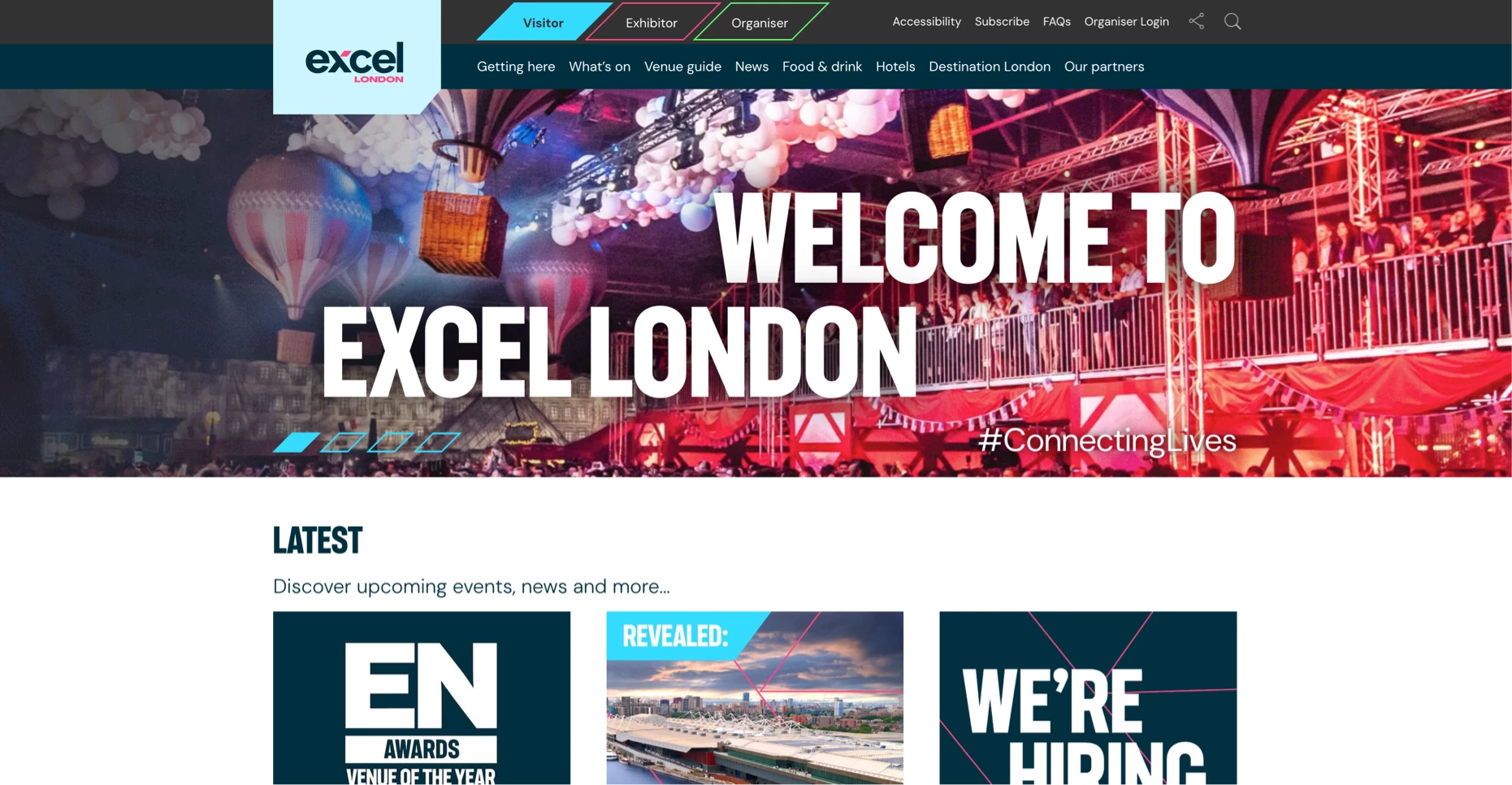
With a fixed launch date four months away, Excel London’s new website required a tightly prioritised technical delivery plan. Integral led the creative design while I took responsibility for the platform architecture, data model, CMS structure and full-stack development. This meant deciding what was essential for launch, what could be simplified and where the system needed flexibility from the outset.
Following four months of focused delivery, the complete website launched on time. The relationship then grew beyond the original brief into a series of connected systems supporting visitors before and during events, operational teams across the venue, and the commercial process behind bringing new events to Excel.
The work called for more than implementing supplied screens. I translated business and operational requirements into product structure, made the architectural decisions and remained hands-on through delivery.
Defined the application structure, data model and relationships needed to connect events, audiences, services and venue information.
Turned loosely defined needs into workable user journeys, prioritised the fixed launch scope and challenged unnecessary complexity.
Built across the CMS, frontend, backend, integrations, payments, document generation and operational interfaces.
Coordinated other developers on later systems, divided work, reviewed and tested delivery, and took ownership when an implementation needed rebuilding.
Excel had a clear organising idea: visitors, exhibitors and event organisers should each have a route through the website designed around what they needed to accomplish.
The complication was that the same venue information could be relevant in two or all three sections. Creating separate copies would make content drift inevitable. I adapted SimpleCog so one canonical item could appear across multiple audience journeys and remain synchronised from its source. When genuine differences were required, editors could clone the item and tailor it for that context.
I also substantially upgraded the CMS interface and built a row-and-column drag-and-drop content builder. This gave editors control over flexible page structures at a time when visual block-based editing was not yet common in mainstream content-management systems.
The resulting platform combined event listings and filters with venue information, hotels, local recommendations, food and drink, journey planning, exhibitor services and organiser areas. Authenticated sections connected organisers and exhibitors with the services relevant to their events.
Many visitors used the website while travelling to the venue or moving around its large campus. Some were arriving from overseas at a time when mobile data and roaming costs were particularly sensitive.
Mobile performance was therefore a product requirement rather than a finishing pass. I developed automated image handling within SimpleCog that generated and served an appropriately optimised image for the visitor’s screen and the exact space it occupied, without editors having to prepare multiple files manually.
This was supported by careful control of page weight, caching and responsive behaviour. The objective was straightforward: event details, directions and practical venue information needed to remain useful on a phone and on an imperfect connection.
Performance mattered most at the point visitors depended on the platform.
Mobile product principle
The most useful systems joined a clear public experience to the less visible tools staff needed behind the scenes.
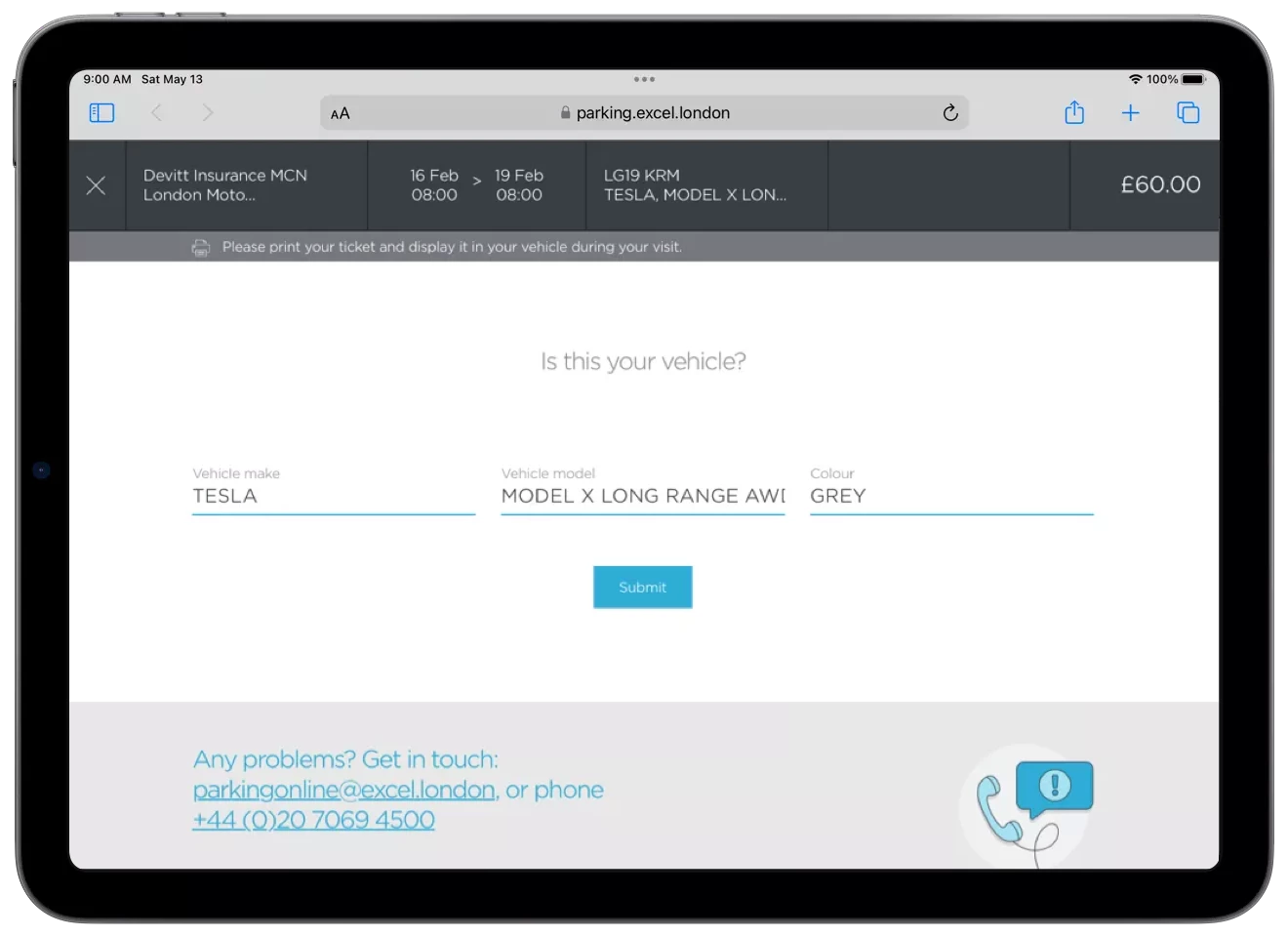
I designed and built a step-by-step booking flow that allowed visitors to reserve parking before an event and arrive with a printable PDF ticket. The system included a custom Stripe checkout, transactional emails and a vehicle lookup that returned the make and model associated with a registration number, giving visitors a useful confirmation before they paid.
A companion application supported parking attendants in the underground car park. Camera recognition was outside the available budget, so I designed predictive registration entry around the conditions staff actually faced. The application cached that day’s bookings because mobile signal was unreliable, then synchronised whenever Wi-Fi or a data connection became available. Attendants could confirm that they held a current booking list before enforcement decisions were made.
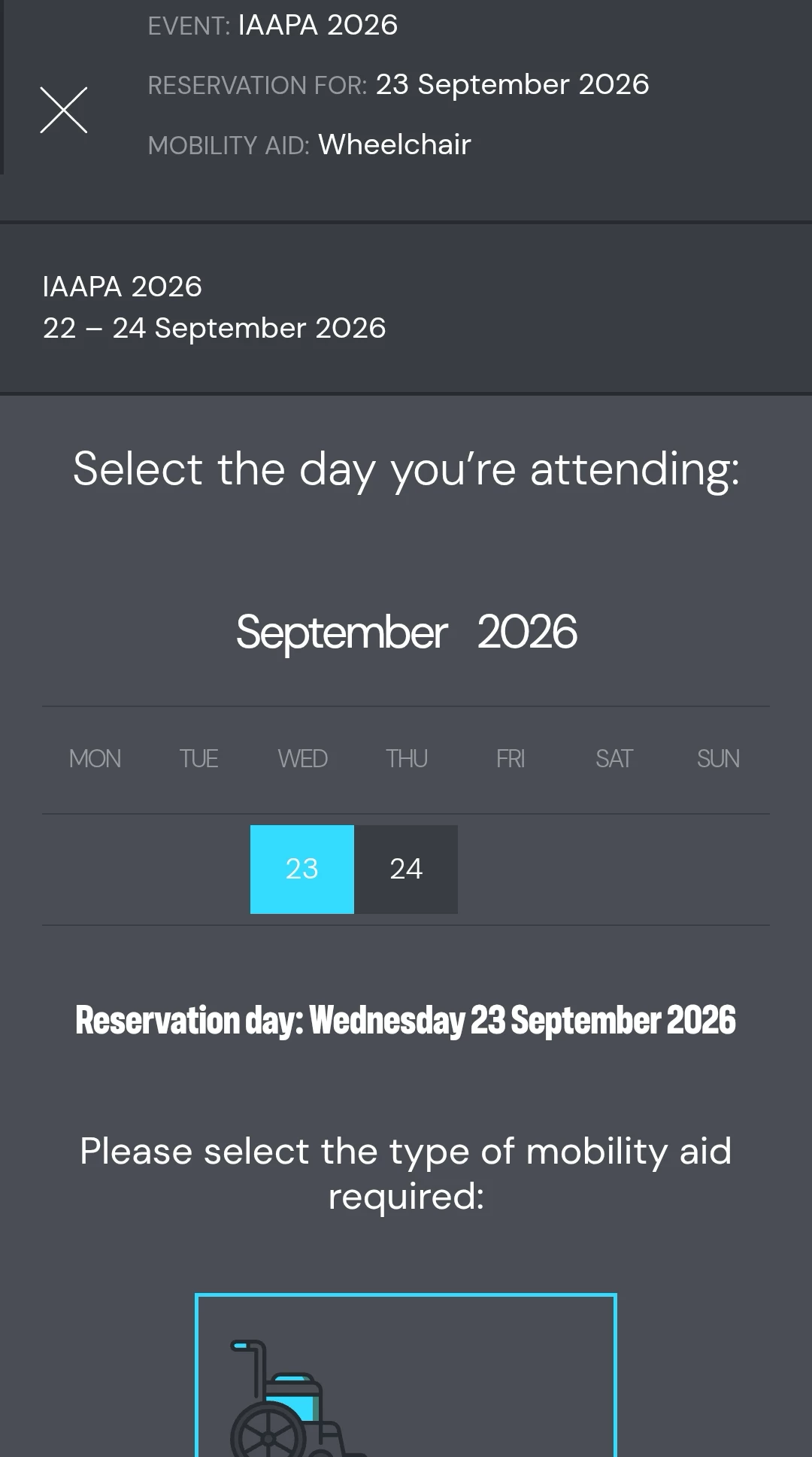
I later applied the same guided approach to reserving wheelchairs and mobility scooters. Visitors could provide the necessary booking and identification information online, while guest-relations staff had a mobile interface for checking equipment out and back in and confirming the required checks.
Because this involved identification data, privacy and security shaped the system from the beginning. Access was restricted to the people who needed it, data was protected in storage and transit, activity could be audited, and retention and deletion were treated as part of the workflow rather than an afterthought.
With a large selection of places to eat and drink across the campus, opening hours and visitor guidance needed to reflect which outlets were operating for each event.
I built a management application through which venue teams could maintain outlet opening hours. The same information generated a spreadsheet distributed to outlet managers for staffing allocation and fed the public-facing food guide.
It also powered touchscreen applications on customised Razor display boards around the venue. I specified the mini PCs installed behind the screens, built the lightweight browser shell and developed the web application itself. Visitors could filter outlets by food preference, allergies, vegetarian or vegan options and price range, then see an estimated walking time and map from their current location.
Because the touchscreen experience used the same managed data, recommendations reflected live opening hours without creating another content-maintenance task.
Preparing a proposal for a potential event could consume most of a working day as teams assembled PowerPoint presentations and printed documents by hand.
I designed and built a proposal system around reusable content blocks. Common venue information could be maintained centrally and combined with material specific to the event, reducing repeated production without making every proposal feel identical.
From the same content source, the system generated both an interactive microsite and a downloadable PDF. Excel’s original estimate was that a proposal could take up to eight hours to prepare; system timings later showed an average of approximately eight minutes from an editor beginning work to publishing it.
More than 2,200 proposals were created between 2017 and 2023. In 2023, an average of 85% of proposals sent through the system went on to become live events at Excel, with the remainder either not proceeding or selecting another venue.
Canonical content could be reused across visitor, exhibitor and organiser routes and updated from one source. Editors retained the option to clone and adapt it when the audience genuinely needed different information.
The parking application cached the current day’s bookings and synchronised opportunistically, allowing staff to work underground without assuming a continuous connection.
Food data served managers, spreadsheets, the website and venue touchscreens. Proposal content produced both interactive microsites and PDFs. In each case, the system reduced drift and repeated administration.
The mobility system used restricted access, protected data handling, auditing and retention controls appropriate to the identification information required for the service.
The clearest result is not one feature or launch figure, but the breadth and longevity of the systems that followed the original four-month recovery.
When the agency through which the work began later ceased trading, I maintained continuity and continued working with Excel independently. The relationship has now extended from 2016 to the present, across public-facing experiences, staff tools, payments, integrations, content operations and commercial systems.
Excel’s website, car park, food outlets, mobility equipment and sales proposals could have become unrelated pieces of software. The more valuable approach was to understand the shared information, operational constraints and human journeys connecting them.
This work reflects how I operate as a product-minded senior full-stack developer: comfortable moving from a loosely defined business problem to UX and data modelling, then into hands-on engineering, integrations and reliable long-term delivery.